Tax included.
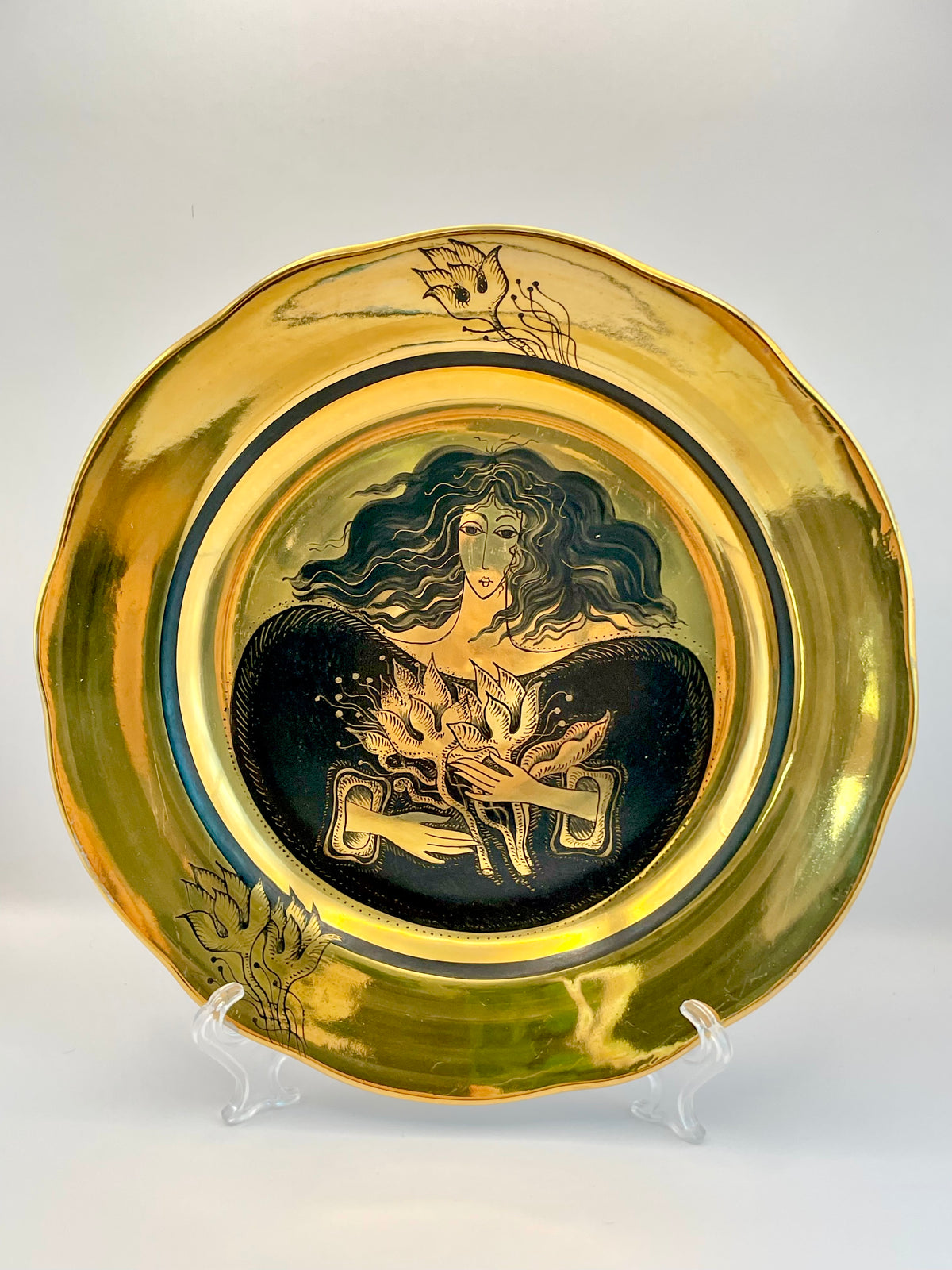
You are looking at the 50-year-old museum-grade masterpiece created by Anu Ivask in Tallinn ARS studio in 1979. This is a richly gilded and hand-painted porcelain plate in great vintage condition.
The piece features Anu Ivask's signature style - a fairytale-inspired gold lustre illustration set against a deep black centre, surrounded by a gold-gilded rim.
In general, heavily gilded pieces by Anu Ivask maintain a distinct, deep, warm brilliance that does not tarnish or rust over time, because these are covered with the pure gold. However, because the layer of gold is incredibly thin, it is prone to physical friction. This is why finding the 1970s heavily gilded pieces in mint condition with no wear to the gold is exceptionally rare and highly valued.
This exquisite artefact of Estonian art history is reserved strictly for the most patient, passionate, and knowledgeable collectors, because items of this quality rarely enter the open market, and finding a companion piece or anything similar can take years.
Interesting facts:
Anu Ivask:
You can watch an archived documentary about Anu Ivask from 1986 (in the Estonian language)
here
Author signature and no factory mark:
In the Soviet art system, if an item bore only the artist's personal, handwritten signature with no factory marks, it sent a clear message: this piece belongs entirely to the artist, not the state institution. It means Anu Ivask treated this plate strictly as an independent canvas. She painted it by hand, oversaw its firing, and signed it directly as a completed work of fine art.
Gilding:
The material used for gilding at the ARS studios was typically a 10% to 12% solution of pure gold dissolved into an organic chemical mixture (resinates and essential oils like lavender or turpentine). When applied by the artist's brush, it actually looked like a dark, muddy brown or purple liquid. The magic happened in the ceramic kilns – when porcelain was fired at extremely high temperatures (overglaze phase required, usually, between 780°C and 820°C), all the organic solvents, oils, and chemical resinates completely burnt away. A microscopically thin, completely solid layer of pure metallic gold was fused permanently into the porcelain glaze.